Unlocking Visual Impact: The Ultimate Guide to 3D Social Media Icons
In the fast-paced digital landscape of today, first impressions are not just important; they are everything. Whether you are a small business owner crafting your brand identity, a graphic designer seeking fresh inspiration, or a social media manager striving for higher engagement, the visual elements of your online presence play a pivotal role. Among these elements, social media icons serve as the universal language of connectivity. However, in a sea of flat, two-dimensional designs, standing out requires a creative leap. This is where 3D social media icons come into play, offering depth, realism, and a tactile quality that captures attention instantly.
If you are looking to elevate your digital assets, understanding the value of high-quality 3D iconography is essential. In this guide, we will explore what makes 3D icons so effective, why specific file formats like Transparent PNG and AI files are crucial for professional workflows, and how you can integrate these stunning visuals into your projects to achieve a polished, modern aesthetic.
The Evolution of Digital Iconography
To appreciate the power of 3D design, it helps to understand where we have come from. For years, the tech industry relied heavily on "Flat Design." This style, characterized by minimalism, clean lines, and vibrant colors without gradients or shadows, dominated the early 2010s. It was efficient, scalable, and easy to load on various devices. However, as screens became higher resolution and user expectations for visual richness grew, flat design began to feel somewhat sterile and uniform.
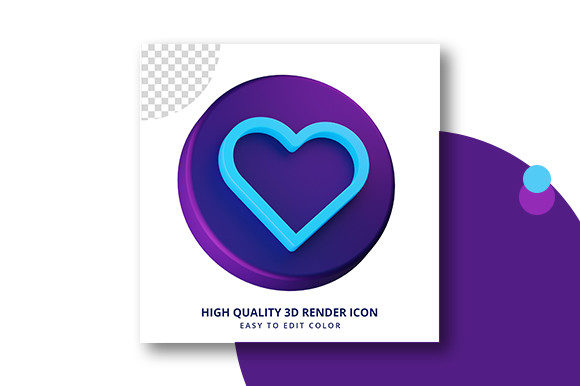
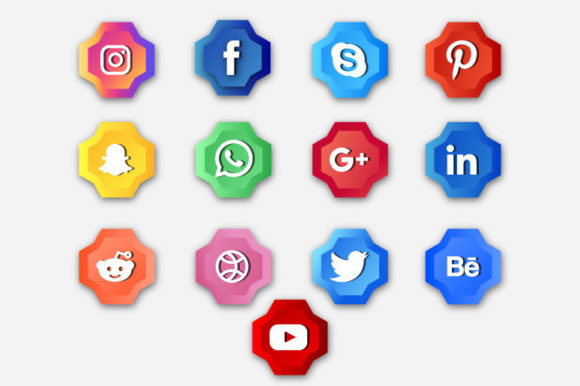
Enter the resurgence of 3D design. Modern users crave immersion. They want interfaces and graphics that feel tangible, almost touchable. 3D social media icons bring this dimension back to the screen. By utilizing lighting, shadows, textures, and perspective, these icons create a sense of volume. A 3D Instagram logo isn't just a camera outline; it is a glossy, metallic object sitting on your dashboard. This shift is not merely aesthetic; it is psychological. Depth draws the eye, suggesting importance and premium quality.
Why Choose 3D Social Media Icons?
Integrating 3D elements into your social media strategy offers several distinct advantages that go beyond simple decoration. Here is why investing in high-quality 3D icons is a smart move for your brand.
1. Enhanced Brand Recognition
Consistency is key to branding, but uniqueness is what gets noticed. Standard vector icons are everywhere. If you use the same default Facebook or LinkedIn icons as thousands of other companies, your brand blends into the background. Custom 3D icons allow you to inject personality into your brand guidelines. You can adjust colors, materials (like glass, metal, or clay), and lighting to match your specific brand voice, making your social links instantly recognizable.
2. Increased Click-Through Rates (CTR)
Visual hierarchy guides the user's eye. Because 3D objects appear to pop off the screen due to their shadows and highlights, they naturally draw more attention than flat counterparts. When placed strategically on a website footer, a landing page, or within an email signature, these icons act as compelling call-to-action buttons. Studies in UI/UX design suggest that visually distinct elements receive more interaction, potentially leading to higher follower counts and better engagement across platforms.
3. Versatility Across Platforms
A well-rendered 3D icon is versatile. It looks stunning on a dark-mode website, crisp on a light-colored brochure, and equally impressive as a thumbnail for a YouTube video or a cover image for a Pinterest post. The depth adds a layer of sophistication that works well in both corporate presentations and creative portfolios.
Understanding the Deliverables: What Will You Get?
When browsing asset libraries or purchasing design packs, you will often encounter specific file format descriptions. Understanding these formats is critical to ensuring you get exactly what you need for your project. Specifically, when looking for premium 3D social media icon sets, you should expect two primary deliverables: Transparent PNG and AI File. Let’s break down why each is valuable.
1. Transparent PNG: Immediate Usability
PNG (Portable Network Graphics) is one of the most popular image formats for web and print design, particularly when transparency is required. A transparent PNG means that the background of the image has been removed, leaving only the 3D icon visible. This is incredibly practical for several reasons:
- No Background Clashes: Whether you place the icon on a white website header, a black blog post, or a colorful Instagram story, the transparent background ensures no awkward white boxes surround your icon.
- Web Optimization: PNGs are widely supported by all browsers and content management systems (like WordPress, Wix, or Squarespace). They offer a good balance between high quality and file size, ensuring your site loads quickly without sacrificing visual fidelity.
- Ready to Use: For non-designers or quick-turnaround projects, PNGs are plug-and-play. You simply drag and drop them into your design software or website builder.
2. AI File: Professional Editability
For professional designers and those who require precise control over their assets, the AI (Adobe Illustrator) file is indispensable. While PNGs are raster-based (made of pixels), AI files are vector-based (made of mathematical paths). This distinction offers significant benefits:
- Infinite Scalability: You can resize a 3D icon from the size of a postage stamp to the size of a billboard without any loss of quality. There are no jagged edges or pixelation.
- Customization: With an AI file, you can modify colors, adjust the shape, change the texture, or combine elements with other graphics. If your brand color changes from blue to green, you can update the icon instantly rather than hunting for a new download.
- High-Resolution Print: If you plan to print business cards, flyers, or banners featuring your social media handles, vector files ensure the sharpest possible output.
By providing both formats, creators ensure that the asset is useful for everyone, from the casual blogger to the senior art director.
Common Misconceptions About 3D Design
As interest in 3D assets grows, so do some myths that may deter potential users. It is helpful to clarify these points to make informed decisions.
Myth 1: 3D Icons Slow Down Websites.
This was true in the early days of the web when images were heavy and unoptimized. Today, thanks to advanced rendering techniques and optimized file compression, a single 3D icon PNG weighs very little—often just a few kilobytes. Furthermore, using CSS filters or SVG animations can sometimes achieve 3D-like effects with even lighter file sizes. The visual payoff far outweighs the negligible impact on load times.
Myth 2: You Need Advanced Software to Use Them.
While creating 3D icons from scratch requires specialized software like Blender or Cinema 4D, using them does not. As mentioned, the provided PNG files work in any basic design tool, including Canva, PowerPoint, Keynote, and standard photo editors. You do not need to be a 3D artist to benefit from 3D aesthetics.
How to Integrate 3D Icons into Your Workflow
Now that you understand the value and the formats, how do you actually implement these icons? Here are a few practical applications:
- Social Media Kits: Create a cohesive look for your profile pictures, covers, and highlight icons by using a matching set of 3D brand icons. This creates a unified visual identity that looks professional and curated.
- Email Signatures: Ditch the tiny, blurry icons found in default email signatures. Replace them with crisp, 3D versions to add a touch of professionalism and modern flair to every communication you send.
- Website Footers and Headers: Place 3D icons in your navigation bar or footer to guide users to your social channels. Their depth makes them stand out against the rest of the page content.
- Presentation Decks: If you are pitching to clients or presenting data, using 3D icons for metrics or platform references can make your slides more engaging and memorable.
Where to Find High-Quality Assets
The internet is flooded with free resources, but quality varies wildly. Many free icons suffer from inconsistent lighting, poor resolution, or generic designs that lack character. For projects where brand perception matters, investing in a curated pack is often worth it.
When searching for these assets, look for creators who provide comprehensive packages. A great design package doesn't just give you the image; it gives you the flexibility to adapt. Feel free to visit my shop to explore a collection of meticulously crafted 3D social media icons. Whether you need a subtle, minimalist 3D look or a bold, vibrant style, you can find designs that resonate with your vision. By choosing a premium source, you ensure that you receive clean code, properly layered files, and support if you need assistance customizing the assets.
Conclusion
In the competitive world of digital marketing and design, details matter. 3D social media icons are more than just pretty pictures; they are strategic tools that enhance usability, boost brand recognition, and communicate quality. By leveraging the dual benefits of Transparent PNG files for immediate deployment and AI Files for long-term customization, you empower yourself to create dynamic, responsive, and visually stunning digital experiences.
Don't let your social presence blend into the flatness of the crowd. Embrace the depth, clarity, and modern appeal of 3D design. Explore the available options, choose the style that fits your brand, and start transforming your online footprint today. Your audience is looking at your visuals every day—make sure they are giving them a reason to stop and look closer.