Unlocking the Potential of the Goldfish 3D Laser Cut Template for Multi-Material Crafting
The landscape of digital fabrication and custom crafting has undergone a significant transformation in recent years, driven by the accessibility of vector-based design tools and affordable cutting machinery. At the heart of this revolution is the ability to take a simple two-dimensional file and transform it into a complex, three-dimensional object with precision and ease. One such resource that exemplifies this capability is the Goldfish 3D Laser Cut Template. This specific design offers more than just a cute aquatic shape; it represents a sophisticated approach to layered construction, allowing creators to produce depth, texture, and visual interest using a variety of materials.
For hobbyists, educators, and professional designers alike, understanding how to leverage multi-layered vector files is crucial. The Goldfish template is not merely a single cut-out but a structured assembly of components designed to interlock or stack, creating a volumetric effect. By exploring the technical specifications, material applications, and creative workflows associated with this template, users can unlock new possibilities in their craft projects, educational demonstrations, and commercial product lines.
Understanding the Technical Architecture of the Design
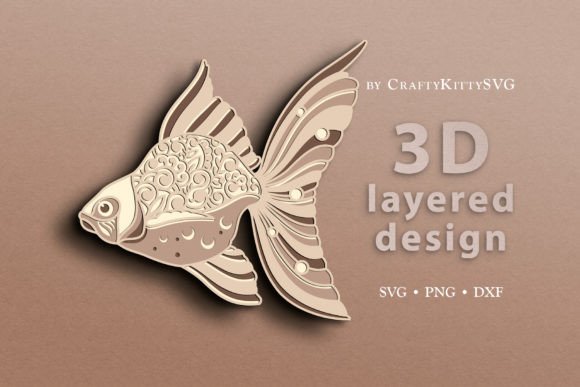
Before diving into the creative applications, it is essential to understand the technical foundation that makes the Goldfish 3D Laser Cut Template so versatile. Unlike standard stencils or single-layer decals, this item includes a single zip archive containing a comprehensive set of vector-based files organized into four distinct layers. This layering system is the key to achieving the three-dimensional effect. Each layer corresponds to a different part of the goldfish’s anatomy—such as the body, fins, tail, and eye—allowing for precise control over the final assembly.
The inclusion of multiple file formats ensures compatibility across a wide range of hardware and software ecosystems. The package provides:
- SVG Files: These are native vector files compatible with popular cutting software like Cricut Design Space and Glowforge. SVGs allow for infinite scalability without loss of quality, meaning you can resize the goldfish from a small ornament to a large wall decoration while maintaining crisp edges.
- DXF Files: Designed for precision engineering and industrial applications, DXF files are compatible with Silhouette Studio and CNC laser machines. This format is particularly useful for users who require exact coordinate mapping for automated cutting processes or when working with heavy-duty materials like metal or thick acrylic.
- PNG Files: For those who prefer raster-based workflows or need ready-to-print designs for engraving purposes, high-resolution PNG files are included. These are fully compatible with Glowforge engraving features, allowing users to add shading or texture details through laser intensity adjustments rather than physical cuts.
This multi-format approach removes the barrier to entry for users with different equipment setups. Whether you are operating a desktop cutter in a home studio or managing a fleet of industrial lasers in a manufacturing facility, the Goldfish 3D Laser Cut Template adapts to your workflow.
Material Versatility: Beyond Standard Paper Crafts
One of the most compelling aspects of the Goldfish 3D Laser Cut Template is its adaptability to diverse materials. While paper and cardstock are traditional choices for laser-cut crafts, the structural integrity required for a 3D model often benefits from stiffer substrates. The design instructions typically account for varying thicknesses, ensuring that the layers fit together securely regardless of the material chosen.
Wood and Plywood
Using wood or plywood adds a natural, rustic aesthetic to the goldfish. Birch plywood, in particular, is favored for laser cutting due to its smooth surface and consistent density. When layered, thin sheets of plywood create a warm, organic look that contrasts beautifully with the sleek lines of the digital design. This combination is ideal for home decor items, such as shelf brackets, wall art, or children's room decorations.
Acrylic and Plexiglass
For a modern, vibrant finish, acrylic is an excellent choice. Acrylic sheets come in a vast array of colors and finishes, including transparent, translucent, and opaque options. Cutting acrylic with a CO2 laser results in polished, flame-sealed edges that enhance the visual appeal of the design. A translucent goldfish made from yellow or orange acrylic can mimic the appearance of light passing through water, adding a dynamic element to any display. Furthermore, acrylic’s durability makes it suitable for high-traffic environments or outdoor installations where weather resistance is a concern.
Metal and Cardstock
While less common for intricate 3D models due to thickness constraints, thin metals like brass or aluminum can be used for specialized industrial or artistic applications. Conversely, cardstock remains a staple for quick prototyping and educational activities. Its affordability and ease of handling make it perfect for classroom settings where students can assemble the goldfish to learn about spatial geometry and assembly techniques.
Practical Applications Across Industries
The versatility of the Goldfish 3D Laser Cut Template extends beyond personal hobbies, finding practical use in various professional and educational sectors.
Educational Tools
In STEM (Science, Technology, Engineering, and Mathematics) education, this template serves as an engaging tool for teaching concepts related to biology, geometry, and engineering. Teachers can use the layered design to discuss the anatomy of fish, the importance of fins for movement, and the principles of structural stability. Students can experiment with different materials to see how weight distribution affects the balance of the 3D model, fostering hands-on learning experiences.
Custom Retail Products
Small business owners and artisans can utilize the Goldfish 3D Laser Cut Template to create unique merchandise. Personalized gifts, such as engraved acrylic plaques or wooden name tags shaped like goldfish, offer a distinctive value proposition. Because the design is vector-based, it can be easily customized with text or logos, allowing businesses to tailor products to specific client requests. The ability to change colors and sizes in cutting software means that inventory management is streamlined, as one digital file can produce dozens of variations.
Event Decorations and Party Favors
Aquatic-themed events, such as birthday parties, baby showers, or corporate retreats with a "splash" theme, can benefit significantly from this design. Large-scale goldfish installations can serve as photo backdrops or centerpieces, while smaller versions can be assembled as party favors. The 3D aspect adds a tactile dimension that flat cutouts lack, making the decorations more memorable and interactive for guests.
Workflow Optimization and Best Practices
To achieve the best results with the Goldfish 3D Laser Cut Template, adhering to a structured workflow is recommended. First, always perform a test cut on scrap material to verify the laser settings for power, speed, and frequency. Different materials react differently to heat, and incorrect settings can lead to burning, melting, or incomplete cuts.
When assembling the layers, consider the order of operations. Typically, smaller, more intricate pieces like eyes or scales should be removed first to prevent them from falling out during the handling of larger sections. Using adhesives compatible with your chosen material is crucial; for wood and paper, white glue or hot glue works well, while acrylic may require solvent-based cements for a seamless bond. If using a CNC machine instead of a laser, ensure that the bit size matches the slot dimensions to avoid loose fits.
Additionally, taking advantage of the color customization options available in your cutting software can elevate the final product. Instead of sticking to a single color palette, experiment with contrasting layers to highlight specific features. For example, using a dark blue layer for the background and bright orange for the fish can create a striking visual pop. This flexibility allows creators to align the design with specific branding guidelines or thematic requirements.
Conclusion
The Goldfish 3D Laser Cut Template stands as a testament to the power of digital design in modern crafting. By combining technical precision with creative flexibility, it empowers users to transform simple vector files into tangible, three-dimensional artworks. Whether you are an educator seeking to inspire students, a business owner looking to differentiate your products, or a hobbyist eager to expand your skills, this template offers a robust platform for exploration. With support for multiple file formats and a wide range of compatible materials, the possibilities are limited only by imagination. Embracing the potential of layered vector designs opens the door to innovative projects that blend art, technology, and craftsmanship seamlessly.