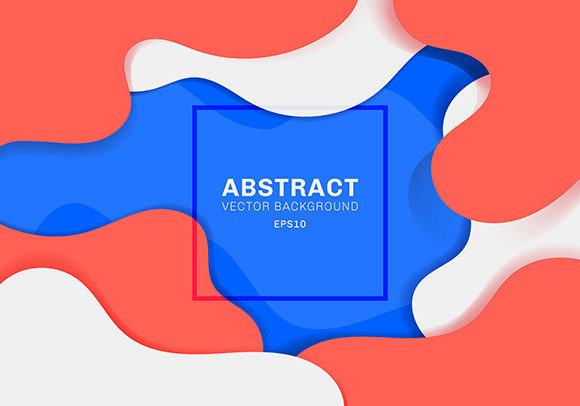
Abstract 3D Fluid Template Background: A Comprehensive Guide to Modern Vector Design Assets
In the rapidly evolving landscape of digital and print media, visual impact is paramount. The demand for high-quality, versatile design assets has never been higher, driving creators toward sophisticated solutions that blend artistic flair with technical precision. Among these solutions, the Abstract 3D Fluid Template Background has emerged as a dominant force in contemporary graphic design. These assets are not merely decorative; they represent a convergence of modern aesthetic trends—specifically the dynamic interplay of liquid forms, vibrant color palettes, and three-dimensional depth—packaged into highly functional vector files.
This guide explores the intricate details of Abstract 3D Fluid Template Backgrounds, examining their composition, technical specifications, and diverse applications across various professional fields. By understanding the nuances of these designs, professionals, consumers, educators, and business owners can leverage them to create compelling visual narratives that resonate with modern audiences.
The Evolution of Fluid Dynamics in Digital Art
To appreciate the value of an Abstract 3D Fluid Template Background, one must first understand the artistic movement it represents. Traditional flat design, which dominated the early 2010s, relied on simplicity and minimalism. However, as screen resolutions increased and processing power improved, designers sought ways to introduce depth, texture, and realism without sacrificing the scalability inherent to vector graphics.
Fluid dynamics in art mimic the behavior of liquids, gases, and molten materials. When rendered digitally, these elements appear to flow, merge, and separate, creating organic shapes that feel alive. The "Abstract" qualifier indicates that these forms do not necessarily represent literal objects but rather evoke emotion and energy through form and color. This approach allows for a high degree of customization, making it ideal for branding and creative projects where uniqueness is essential.
Deconstructing the Visual Elements
A high-quality Abstract 3D Fluid Template Background is characterized by specific visual components that work together to create a cohesive image. Understanding these elements helps designers select the right asset for their specific needs.
- Vibrant Color Palettes: The use of bold, saturated colors is a hallmark of this style. The combination of blue, white, and red elements is particularly striking. Blue often conveys trust, stability, and technology; white provides clarity, space, and balance; and red injects energy, passion, and urgency. When these colors interact within a fluid context, they create a visual tension that captures attention immediately.
- Three-Dimensional Depth: Despite being two-dimensional images, these backgrounds utilize shading, highlights, and shadows to simulate volume. This 3D effect gives the impression that the fluid shapes are floating or interacting in physical space, adding a layer of sophistication that flat colors cannot achieve.
- Liquid Textures: The "liquid" aspect refers to the smooth gradients and seamless transitions between colors. Unlike rigid geometric shapes, liquid forms have soft edges and flowing contours. This softness makes the design feel approachable and modern, reducing visual fatigue for the viewer.
Technical Specifications and File Formats
One of the primary advantages of using vector-based assets is their scalability and editability. An Abstract 3D Fluid Template Background is typically delivered as a fully editable vector file, ensuring that designers can manipulate every element to fit their project requirements.
Vector Integrity and Resolution
All graphics in these templates are 100% vector. This means they are composed of mathematical paths rather than pixels. Consequently, they can be scaled to any size—from a small business card to a massive billboard—without losing quality or becoming pixelated. This is crucial for print materials, where resolution is key. These files are designed for high-resolution output at 300dpi, ensuring crisp lines and smooth gradients in printed brochures, posters, and banners.
Software Compatibility
The versatility of these assets lies in their compatibility with industry-standard software. The file inclusion typically features EPS Version 10, a widely accepted format for vector illustrations. This ensures readability by major vector-based graphic programs such as Adobe Illustrator, Corel Draw, Affinity Designer, and Inkscape. Additionally, JPG previews are often included to allow for quick visualization before editing.
- Adobe Illustrator: The standard for vector design, offering robust tools for manipulating complex paths and gradients.
- Corel Draw: A powerful alternative popular among print designers and sign makers.
- Other Editors: Most modern design tools support EPS import, allowing for broad accessibility regardless of the specific software suite used.
Diverse Applications Across Industries
The adaptability of Abstract 3D Fluid Template Backgrounds makes them suitable for a wide array of applications. Their ability to convey modernity and dynamism makes them a preferred choice for businesses looking to refresh their visual identity.
Marketing and Advertising
In the realm of advertising, capturing attention within seconds is critical. The vibrant colors and dynamic shapes of these backgrounds serve as excellent backdrops for promotional materials. Whether used in social media ads, digital banners, or print flyers, they provide a visually stimulating canvas that draws the eye. The contrast provided by the blue, white, and red elements ensures that text overlays remain readable while maintaining aesthetic appeal.
Corporate Branding and Identity
For corporate clients, consistency and professionalism are vital. These templates offer a modern twist on traditional branding. Companies in the tech, finance, and healthcare sectors often utilize blue and white fluid backgrounds to suggest innovation and reliability. The red accents can be used strategically to highlight calls to action or important data points. Because the vectors are fully editable, brands can adjust hues to match their exact brand guidelines.
Web and UI/UX Design
Web designers increasingly favor fluid backgrounds for landing pages and hero sections. They add depth to websites without the heavy file sizes associated with raster images like PNGs or JPEGs. SVG (Scalable Vector Graphics) exports from these EPS files ensure fast loading times and perfect rendering across different devices and screen densities. The abstract nature of the design also prevents distraction, keeping the focus on the website’s content and navigation.
Print Media and Publications
Brochures, magazines, and annual reports benefit significantly from high-quality background assets. The 300dpi resolution ensures that the fluid gradients print smoothly, avoiding banding artifacts. Educators and researchers can use these backgrounds for presentation slides or academic posters, where visual engagement helps maintain audience interest during complex explanations.
Advantages of Using Pre-Made Vector Templates
While custom illustration offers unique benefits, pre-made Abstract 3D Fluid Template Backgrounds provide several practical advantages for time-constrained professionals.
- Time Efficiency: Creating a high-quality 3D fluid illustration from scratch requires significant skill and time. Templates allow designers to bypass the initial concept and execution phases, focusing instead on integration and customization.
- Cost-Effectiveness: Purchasing a single template is often more economical than hiring an artist for a bespoke design, especially for small businesses or individual hobbyists.
- Proven Quality: Reputable template providers curate their assets to meet high aesthetic standards. Buyers receive polished, professionally designed graphics that are ready for immediate use.
- Flexibility: With 100 fully editable vector layers, users can isolate specific elements, change colors, resize shapes, or combine multiple templates to create entirely new compositions.
Considerations for Implementation
While these assets are powerful tools, successful implementation requires thoughtful consideration. Designers must ensure that the chosen background complements rather than overwhelms the primary content. Text legibility is a common challenge when working with vibrant, complex backgrounds. It is advisable to use semi-transparent overlays or solid text boxes to ensure readability.
Furthermore, while the EPS format is versatile, designers should always check the version compatibility of their software. EPS Version 10 is generally safe for older systems, but newer features in recent Illustrator versions may require conversion. Always backup original files before extensive editing to preserve the integrity of the source material.
Future Trends in Fluid Design
The trend toward abstract 3D fluid backgrounds shows no signs of slowing down. As technology advances, we are seeing a shift towards even more realistic lighting effects and interactive elements. Augmented Reality (AR) and Virtual Reality (VR) platforms are beginning to incorporate these fluid aesthetics to create immersive user experiences. Additionally, the rise of motion graphics has led to static vector templates being animated, bringing the liquid shapes to life with subtle movements and transformations.
Educators and students alike are finding new ways to utilize these designs. In educational settings, fluid backgrounds can help visualize complex scientific concepts, such as molecular structures or fluid mechanics, by providing a visually engaging context for learning materials.
Conclusion
The Abstract 3D Fluid Template Background represents a pinnacle of modern digital design utility. By combining the artistic beauty of fluid dynamics with the technical precision of vector graphics, these assets offer unparalleled flexibility and visual impact. Whether you are a seasoned graphic designer crafting a campaign for a global brand, a small business owner designing a local promotion, or an educator preparing engaging course materials, these templates provide a robust foundation for creativity.
With their high-resolution capabilities, full editability, and compatibility with major design software, they stand as essential tools in the modern creator’s toolkit. Embracing these resources allows professionals to elevate their visual communication, ensuring that their message is not only heard but seen and felt. As the digital world continues to evolve, the ability to harness these dynamic, vibrant, and fluid forms will remain a key differentiator in effective design.