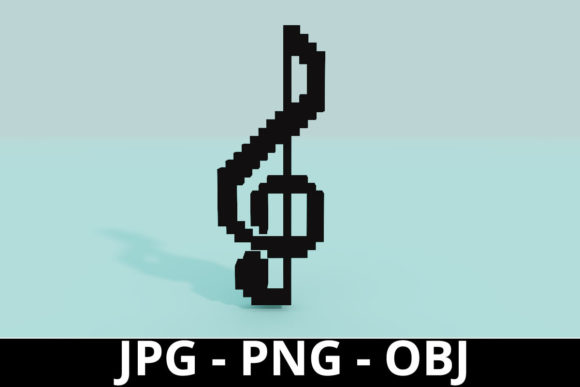
3d Rendering G Key Voxel Art: A Comprehensive Evaluation
In the evolving landscape of digital design, the intersection of retro aesthetics and modern 3D technology has created a niche that appeals to both nostalgic creators and forward-thinking graphic designers. One specific asset category gaining traction is 3d Rendering G Key Voxel Art. This resource pack, typically distributed as a ZIP folder containing high-resolution JPGs, PNGs, OBJ files, and pixel art variants, offers a versatile toolkit for music-related visual design. For professionals evaluating this asset for their projects, understanding its composition, utility, and limitations is essential before making a selection.
Understanding the Asset Composition
To evaluate whether this specific voxel art set aligns with your project requirements, it is necessary to dissect what "3d Rendering G Key Voxel Art" actually entails. At its core, this is a collection of three-dimensional models rendered in a voxel-based style—a digital equivalent of Lego bricks or Minecraft blocks, but with higher fidelity and smoother shading. The central theme revolves around musical notation, specifically focusing on the G clef (also known as the treble clef), alongside complementary elements such as musical notes, gramophones, conductor batons, and abstract sound waves.
The inclusion of multiple file formats within the distribution package is a significant factor in its value proposition. The presence of JPG and PNG files provides immediate visual assets suitable for web graphics, social media posts, or album covers. These raster images often feature isolated backgrounds, allowing for easy integration into existing designs without complex masking. However, the true power of this asset lies in the inclusion of OBJ files. These 3D model files allow designers to import the voxel structures into software like Blender, Maya, or Cinema 4D. This capability transforms static images into dynamic objects that can be rotated, lit, textured, and animated, offering a level of creative control that flat pixel art cannot provide.
Why Designers Are Interested in Voxel Music Assets
The interest in combining voxel art with musical themes stems from a desire to bridge the gap between classical elegance and modern digital minimalism. Music is an auditory experience, but visual representation plays a crucial role in branding, particularly in the streaming era where album art and artist visuals are primary touchpoints. By using 3d rendering g key voxel art, designers can create visuals that feel both timeless and contemporary.
There are several reasons why this specific aesthetic is being evaluated by creative teams:
- Nostalgia Meets Innovation: Voxel art evokes the early days of 3D gaming, triggering nostalgia, while the high-quality rendering techniques used in these assets ensure they do not look dated.
- Thematic Relevance: The focus on the G clef, treble clefs, and musical notation makes this asset immediately recognizable to musicians and audiences alike. It serves as a strong visual shorthand for melody, composition, and classical influence.
- Versatility in Application: Whether designing a logo for a music school, creating icons for a composition app, or developing background elements for a virtual concert stage, these assets provide a cohesive visual language.
Benefits and Practical Applications
When considering the adoption of 3d rendering g key voxel art for your workflow, several distinct benefits emerge. First, the modularity of voxel art allows for easy customization. Since the models are built from discrete units, designers can theoretically alter shapes or combine different elements—such as merging a gramophone icon with a set of musical notes—to create unique compositions without needing to rebuild assets from scratch.
Furthermore, the availability of shadowed and isolated versions of these objects simplifies the compositing process. In graphic design, managing shadows and transparency can be time-consuming. Pre-rendered shadows in JPG/PNG formats save valuable production time, allowing designers to focus on layout and typography rather than lighting calculations. For those utilizing the OBJ files, the ability to adjust lighting environments means you can match the voxel art’s mood to any brand identity, from bright and energetic to dark and moody.
This asset set is particularly well-suited for:
- Digital Album Covers: Providing a unique, eye-catching visual that stands out in crowded digital marketplaces.
- App Icons and UI Elements: The clean, geometric nature of voxel art scales well at small sizes, making it ideal for mobile application interfaces related to music education or playback.
- Social Media Campaigns: Creating engaging, shareable content that leverages trending retro-3D aesthetics.
- Educational Materials: Visual aids for teaching music theory, where clear, distinct symbols like the G clef are required.
Tradeoffs and Considerations
While the appeal of 3d rendering g key voxel art is strong, it is important to approach its adoption with a balanced perspective. There are tradeoffs that designers must consider before integrating these assets into professional workflows.
One primary consideration is the stylistic limitation. Voxel art has a very specific look. If your brand identity relies on photorealism, fluid organic shapes, or intricate hand-drawn illustrations, voxel art may clash with your overall visual strategy. It works best when the design direction embraces blocky, geometric, or pixelated aesthetics. Attempting to force voxel assets into a hyper-realistic or minimalist line-art context can result in a disjointed user experience.
Another technical consideration involves the complexity of the OBJ files. While having access to 3D models is beneficial, it requires a certain level of technical proficiency. Designers who are only comfortable with 2D tools like Photoshop or Illustrator may find the learning curve for importing and manipulating OBJ files steep. Additionally, high-fidelity voxel renders can be computationally expensive. Animating these objects or rendering them in real-time for video projects may require powerful hardware, potentially slowing down the production pipeline for smaller teams.
Finally, thematic specificity can be a double-edged sword. The heavy focus on the G clef and traditional musical notation means these assets are highly specialized. If your project relates to electronic music, hip-hop, or non-musical topics, the relevance of these specific symbols diminishes. You may end up with assets that look visually appealing but lack contextual meaning.
Decision-Making Insights: Is This Right for You?
Determining whether to incorporate 3d rendering g key voxel art into your next project depends on a careful assessment of your goals and resources. This asset set is a strong fit if you are working on a project that requires a blend of classical musical imagery with a modern, digital aesthetic. It is particularly effective for brands targeting a demographic that appreciates retro-tech vibes or for educational platforms aiming to make music theory more approachable through gamified visuals.
Conversely, alternatives may be worth considering if your needs differ. If you require photorealistic depictions of instruments or environments, standard 3D modeling or photography would be more appropriate. If your budget does not allow for the learning curve associated with 3D software, sticking to the provided JPG and PNG raster files might be sufficient, though you will lose the flexibility of 3D manipulation. For projects requiring highly custom, unique illustrations that defy geometric constraints, hiring a custom illustrator might yield better long-term results than adapting pre-made voxel packs.
In conclusion, 3d rendering g key voxel art represents a specialized but powerful tool in the digital designer’s arsenal. Its combination of nostalgic charm, technical versatility, and thematic clarity makes it a compelling choice for music-centric design projects. By weighing the benefits of its multi-format delivery against the stylistic and technical constraints, designers can make informed decisions that enhance their creative output without compromising efficiency or brand integrity.