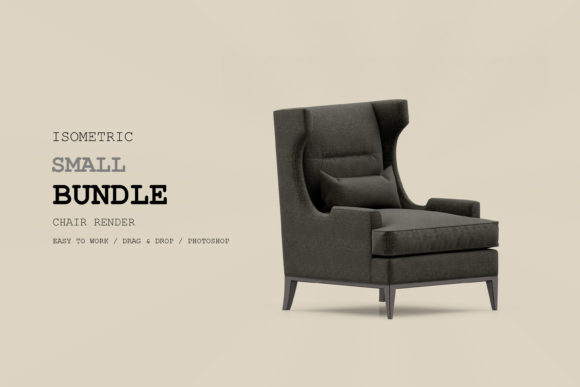
Isometric Armchair 3D Rendering Pac 133
In the modern digital landscape, visual communication is no longer just an aesthetic choice; it is a fundamental component of workflow efficiency and brand clarity. For designers, marketers, architects, and content creators, the ability to present products or spaces with precision and clarity can mean the difference between a successful pitch and a missed opportunity. This is where specialized assets like Isometric Armchair 3D Rendering Pac 133 become indispensable tools in the creative process. Rather than viewing this asset merely as a static image, it should be understood as a modular component within a larger production pipeline, designed to integrate seamlessly into diverse professional environments.
The term "Pac" often implies a package or collection, suggesting that this rendering is not an isolated graphic but part of a structured system. Isometric projection itself offers a unique advantage over traditional perspective rendering: it eliminates vanishing points, allowing objects to be viewed from a fixed angle without distortion. This makes it ideal for technical illustrations, e-commerce displays, and architectural diagrams where accurate proportions are critical. When combined with high-quality 3D rendering techniques, the result is a clean, professional visual that communicates spatial relationships effectively. Understanding how to leverage such an asset requires looking beyond its surface appearance and examining its structural properties, file organization, and intended applications.
Technical Specifications and Workflow Integration
Before integrating any digital asset into a project, understanding its technical foundation is crucial for maintaining quality control. Isometric Armchair 3D Rendering Pac 133 is built on specifications that prioritize usability across various mediums. The inclusion of a separated background is perhaps the most significant feature for workflow efficiency. In practical terms, this means the armchair exists independently of its environment, allowing designers to place it into any context—be it a minimalist white space for a product catalog, a cozy living room scene for a blog post, or a construction site for architectural visualization—without spending hours masking out complex edges. This separation reduces post-production time significantly, enabling faster iteration cycles.
Furthermore, the asset is provided in high resolution with a DPI of 300. This specification is non-negotiable for professionals who require print-ready materials. A DPI of 300 ensures that when the image is scaled for physical outputs such as brochures, posters, or exhibition boards, it remains crisp and free of pixelation. For digital use, this high resolution provides ample flexibility for cropping and zooming, ensuring that the detail remains sharp even on high-density displays. This dual-purpose capability bridges the gap between digital marketing and traditional print media, allowing teams to maintain consistency across channels without needing to source separate assets for different formats.
One of the most valuable aspects of this rendering package is its organized layers. In professional design software like Adobe Photoshop or Illustrator, layer organization dictates how easily a designer can manipulate individual components. With organized layers, users can adjust the color of the upholstery, change the material of the legs, or modify the lighting direction without re-rendering the entire model from scratch. This modularity supports a dynamic workflow where feedback loops are short and changes are implemented quickly. It transforms a static image into a flexible template, encouraging experimentation and reducing the risk of starting over from zero when a client requests a variation.
Practical Applications Across Industries
The versatility of Isometric Armchair 3D Rendering Pac 133 allows it to serve multiple roles depending on the user’s specific goals. Its application spans educational, commercial, and creative domains, making it a universal tool for visual storytelling.
- School Projects: For students in interior design, architecture, or industrial design courses, this asset provides a realistic reference point. It allows learners to focus on composition and presentation skills rather than struggling with the complexities of 3D modeling from scratch. The separated shadow feature adds depth and realism, helping students understand how light interacts with objects in an isometric view.
- Social Network Content: In the fast-paced world of social media, engagement is driven by clear, eye-catching visuals. An isometric armchair rendering stands out in crowded feeds because of its geometric clarity and clean lines. Marketers can use this asset to create carousel posts, infographics about furniture trends, or promotional graphics for home decor brands. The separated background allows for easy integration into branded templates, ensuring visual consistency across platforms like Instagram, Pinterest, and LinkedIn.
- Print Projects: As mentioned earlier, the 300 DPI resolution makes this asset suitable for tangible outputs. Catalogs, lookbooks, and magazine advertisements benefit from the high fidelity of the rendering. Designers can pair the armchair with typography and other graphical elements to create compelling layouts that drive sales or convey information effectively.
- Architecture Design: Architects often need to furnish their renderings to help clients visualize scale and proportion. While full 3D walkthroughs are powerful, they can be time-consuming to produce. An isometric view offers a quick, comprehensive snapshot of a space. By placing the armchair in an isometric floor plan or elevation, architects can demonstrate furniture placement and spatial flow without committing to a full photorealistic render.
- Blog and Web Content: For bloggers and web developers, loading speed and visual appeal are paramount. High-quality images enhance user experience, but large files can slow down websites. However, since this asset is a vector-based or high-res raster file with organized layers, it can be optimized for web use while retaining quality. It serves as a perfect hero image or illustrative element in articles about home office setups, ergonomic seating, or interior design tips.
- Advertisement: In direct response advertising, clarity is key. Whether running a Facebook ad or a Google Display campaign, the separated shadow and separated background features allow advertisers to composite the armchair into various scenes dynamically. This enables A/B testing of different backgrounds and contexts to see which resonates best with the target audience, optimizing conversion rates.
Implementation Strategies and Best Practices
To get the most out of Isometric Armchair 3D Rendering Pac 133, users must adopt a strategic approach to implementation. Simply downloading the file is not enough; understanding how to manage it within a project ecosystem is essential. The inclusion of a help file is a critical resource that should be consulted early in the process. This documentation likely contains instructions on opening the file, navigating the layer structure, and recommended settings for export. Ignoring these guidelines can lead to compatibility issues or loss of functionality, such as flattened layers that prevent further editing.
Preparation is another key factor. Before importing the asset into your main project file, ensure that your working environment matches the required specifications. Check your canvas size, color profile (usually sRGB for web, CMYK for print), and resolution settings. Importing a high-DPI asset into a low-resolution canvas can result in scaling issues, while mismatched color profiles can cause unexpected shifts in hue and saturation. By aligning your project settings with the asset’s capabilities, you maintain integrity throughout the production process.
Efficiency also comes from proper file management. Since the asset has organized layers, it is wise to save a master version in an editable format (such as PSD or AI) and then export flattened versions for final delivery. This preserves the ability to make future adjustments if needed. Additionally, naming conventions for layers and groups should be maintained or adapted to fit your team’s workflow. Clear labeling prevents confusion, especially when collaborating with other designers or handing off projects to developers.
Consistency is vital for brand identity. If you are using this armchair in a series of marketing materials, ensure that the lighting, shadow intensity, and color balance remain uniform across all instances. The separated shadow feature allows you to adjust the opacity and blur of the shadow independently, giving you control over how grounded the object appears in different environments. Mastering these subtle adjustments elevates the professionalism of your work.
Long-Term Value and Adaptability
Investing in high-quality, well-structured assets like Isometric Armchair 3D Rendering Pac 133 yields long-term benefits. Unlike generic stock photos that may become outdated or lose relevance, a customizable 3D rendering can be updated to reflect current trends. You can change the fabric texture to match seasonal colors, update the style to reflect new fashion movements, or adapt it for different cultural contexts. This adaptability extends the lifecycle of the asset, providing ongoing value without the need for constant new purchases.
Moreover, the skill set developed while working with such assets is transferable. Learning to navigate organized layers, manage resolutions, and composite separated elements enhances your overall proficiency in design software. These skills are applicable to any 3D asset, whether it is furniture, technology, or abstract shapes. By mastering the workflow around one complex asset, you build a foundation for handling more intricate projects in the future.
Ultimately, the value of Isometric Armchair 3D Rendering Pac 133 lies not just in its visual appeal, but in its role as a facilitator of efficient, high-quality output. Whether you are a freelancer managing tight deadlines, a marketer launching a new campaign, or an educator illustrating complex concepts, this asset provides the reliability and flexibility needed to succeed. By integrating it thoughtfully into your workflow, respecting its technical specifications, and leveraging its modular features, you can achieve professional results that communicate clearly and effectively. In a world saturated with visual noise, clarity and precision are your greatest assets, and this rendering package is designed to deliver exactly that.